Service
Dental implants & dentures in Barrie.
Good for
- Replacing a single missing tooth
- Replacing several teeth in a row
- A full arch of fixed teeth on implants
- Full or partial dentures
- Stabilising loose dentures with implants
- Relines and repairs for existing dentures
What to expect
Consultation and planning
We assess your bone, gums and bite with X-rays and a 3D scan, then walk you through implant and denture options side by side, with costs.
Treatment
Implants are placed and given time to bond with the jawbone. Dentures are custom-fitted over a few short visits.
Your new teeth
Once healed, a crown, bridge or full arch is attached to the implants, matched to the shape and shade of your smile.
Fitting and follow-up
We fine-tune your bite and check in afterwards, so your new teeth feel comfortable to eat with.
How a dental implant works
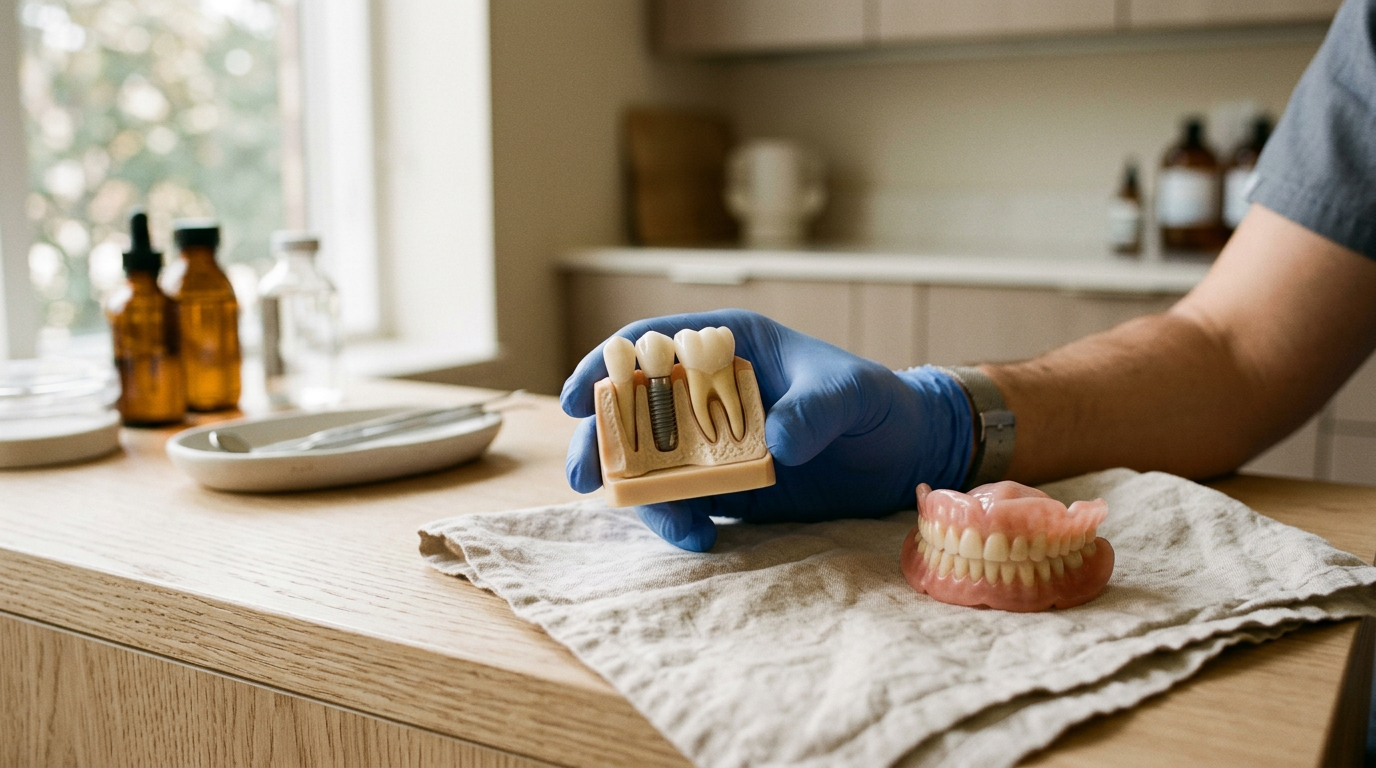
An implant replaces the whole tooth, from root to crown. A small titanium post is placed in the jawbone, where it bonds with the bone over a few months and acts as a new root.
Once it has healed, a custom crown, bridge or denture is attached on top. The result looks and works like a natural tooth, and you care for it the same way.
Why replace a missing tooth
A gap can seem minor, but it affects the teeth around it. Over time neighbouring teeth drift into the space, your bite shifts and chewing can become uncomfortable.
Protects your bite
Filling the gap stops nearby teeth from tilting or drifting.
Helps keep your jawbone
Bone shrinks where a root is missing. An implant gives it something to hold on to.
Spares healthy teeth
Unlike a traditional bridge, an implant doesn’t need the teeth beside it to be filed down.
Eat and speak with confidence
Fixed teeth don’t slip, click or need to come out at night.
Implant options
Single tooth implant
One post and one crown for a tooth lost to decay, injury or an extraction.
Multiple teeth implants
Two or more implants support a bridge for several missing teeth in a row, without relying on your natural teeth.
Full arch (All-on-4 and All-on-6)
A full upper or lower set of fixed teeth held by four to six implants. For patients missing most or all of their teeth, or tired of loose dentures.
Implant-supported dentures
Dentures that clip onto implants, so they stay put when you eat or speak and can still come out to clean.
Denture options
Not everyone needs or wants implants. Dentures are quicker, cost less and our in-house denturist makes them to fit your mouth.
Partial dentures
For patients with some natural teeth. They fill the gaps and stop neighbouring teeth from shifting.
Complete dentures
A full arch of replacement teeth when all teeth are missing.
Immediate dentures
Made ahead of time and fitted on the day teeth are removed, so you’re never without teeth.
Relines and repairs
Gums change shape over time. A reline brings back a snug fit, and most cracks and chips can be repaired.
Implant, bridge or denture?
Implant
Most like a natural tooth and the longest-lasting option. Needs enough healthy bone and a few months to heal.
Bridge
Fixed and quicker than an implant, but the teeth on either side are shaped to hold it.
Denture
The quickest and most affordable way to replace many teeth. Removable, and may need relines over time.
Caring for your implants
Brush and floss as usual
Implants can’t decay, but the gums around them still need daily cleaning.
Keep up your cleanings
Regular hygiene visits keep the gums and bone around implants healthy.
Wear a night guard if you grind
Clenching puts extra force on implant crowns.
Avoid smoking
Smoking slows healing and raises the risk of problems around implants.
Caring for your dentures
Clean them daily
Rinse off food, then brush with a denture brush and denture cleaner.
Skip regular toothpaste
It’s too abrasive and wears down denture material over time.
Take them out at night
Let your gums rest, and keep dentures in water so they hold their shape.
Keep up your check-ups
Regular visits keep your gums healthy and your fit comfortable.
Common questions
All FAQsShould I get an implant or a denture?
It depends on how many teeth are missing, your bone health and your budget. Implants feel most like natural teeth, while dentures are quicker and cost less.
Am I a good candidate for implants?
Most healthy adults with enough jawbone are. Gum disease, smoking and some medical conditions can affect healing, so we check all of this at your consultation.
Does getting an implant hurt?
The area is fully numbed during placement. Most patients describe mild soreness for a few days afterwards, managed with over-the-counter pain relief.
How long does the implant process take?
It varies. The implant usually needs a few months to bond with the bone before the final crown or bridge goes on. We’ll give you a timeline at your consultation.
How long do implants last?
With good home care and regular check-ups, implants can last for many years. The crown on top may need replacing over time from normal wear.
Does insurance cover implants?
Coverage depends on your plan. We give you a written estimate first and can send it to your insurer before treatment starts.
Can you fix my existing denture?
Often, yes. Our denturist can reline, adjust or repair most dentures.
What are dentures made of?
Modern dentures are made from a resin that’s moulded to fit your mouth comfortably.
Can I sleep with my dentures in?
It’s best not to. Taking them out overnight gives your gums time to rest. Keep them in water so they don’t dry out.
How much do dentures cost?
It depends on the type of denture, the materials and any treatment needed first. We explain all costs before you start and help you make the most of your insurance.
Ready when you are
Start with an unhurried consultation.
We'll talk through your options, timing and costs together, with no pressure to decide on the day.
- Monday: 9am – 8pm
- Tuesday: 9am – 8pm
- Wednesday: 9am – 8pm
- Thursday: 9am – 8pm
- Friday: 9am – 5pm
- Saturday: 9am – 4pm
- Sunday: Closed
Tip: Consults run longer, so evenings suit many people